
 Translate
Effluent Pump Station Gate Rehabilitation Project
This project replaces the isolation gates at the Effluent Pump Station (EPS). The EPS sends fully treated water (effluent) through West Point’s outfall pipe into Puget Sound using four large pumps. These pumps rely on stable power from the Power Quality Facility. Isolation gates allow each pump to be shut down individually for maintenance while the other pumps remain working.
Project description
The current EPS isolation gates were installed in the early 1990s. They are worn out and nearing the end of their useful life. Each gate is roughly eight feet by eight feet in size. The gates are in a large well that is nearly 40 feet deep.
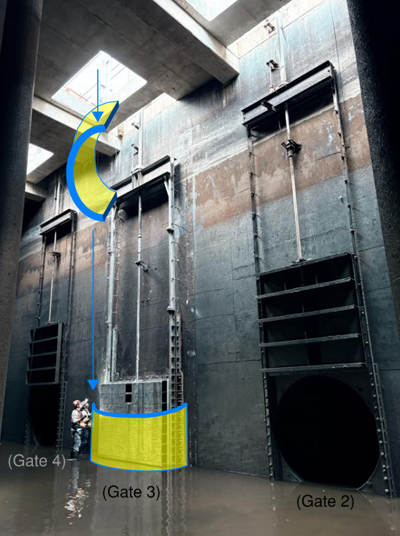
To safely work in the well area, crews must install a temporary bypass pipe out of the well. This requires pumping effluent up and out of the well across a roadway and into the outfall pipe near the passive weir structure. Crews will then install cofferdams. Cofferdams are watertight enclosure to keep an area dry while work is completed.

Because this work requires very low effluent flows and a temporary pipe going across a roadway inside the treatment plant, work is primarily being done at night. Because the work is inside West Point and Discovery Park, the project team does not believe neighbors will see bright lights or hear loud noise from the project.

Benefits
- Safer Maintenance: West Point crews can turn off one EPS pump and close its gate for maintenance or an unexpected problem while keeping the rest of the EPS pumps running.
- Reduced risk of an overflow: Currently, the entire EPS system must be shut down to conduct maintenance. This is caused by several isolation gates not functioning properly. Once completed, West Point staff can close a single gate and shut down an individual pump for maintenance while the rest of the system remains fully operational.