
 Translate
Riding safely: Bikes and electric rides
Recommendations for safe riding and helmet resources
Every day, King County residents get on their wheels for different reasons – fun, community, exercise, and transportation. Government, local agencies, and advocacy groups are working hard every day to improve comfort and safety for everyone traveling on our roads. Whether you already have a ride or are considering one in the future, here are the need-to-know safety topics.
Bike safety
In 2025 in King County:
- One bicycle rider died due to a crash with motorist, an 83% decrease from 2023 when there were six deaths. The decedent was male ranging in age from 35 – 39 years old.1
- From 2020 – 2025, there were 79 bicyclist or other cyclist who died on our roads.
- There were 546 police reported crashes between bicyclists and motorists. Of those, 63 bicyclists sustained serious injuries, representing a 37% increase since 2014 when there were 46 serious injuries.2
- According to the 2023 Harborview Medical Center Trauma Registry, 160 bicycle riders were treated at Harborview, the highest number of patients per year over the past six years. This represents an 11% increase from 2022, when there were 144 bicyclist traumatic injuries.3
- Emergency Medical Services (calls to 911) treated 752 bicycle injuries. In general, most injuries were in people 25 – 64 years old, and males were 3 times more likely than females to be injured.4
- In 2025 alone, societal costs from bicycle crashes added up to over $615 million.5
Bicycle helmet observation studies conducted in King County in 2022 and 2023 showed that King County residents understand the importance of wearing a helmet when riding a bike or scooter, with an average of 85% of observed riders wearing a helmet. However, helmet use among those riding electronic ride-share bicycles was much lower and decreased from 45% in 2022 to 7% in 2023.6
1 Washington Traffic Safety Commission data dashboard. Accessed 10/14/2026.
2 WA State Department of Transportation crash data portal. Accessed 10/14/2026
3 Harborview Medical Center Trauma Registry, received 2024 via Shauna Carlson
4 King County Emergency Medical Services, received 8/2024 via King County EMS
5 WA State Dept. of Transportation by special request
6 King County Bicycle Helmet and Safety Project 2024 Final Report (1.6 MB)
Electronic scooter safety
- From 2018-2023, there were 282 e-scooter-related medical encounters at UW Medicine facilities. The number of e-scooter-related medical encounters increased sharply from 3 in 2020 to 151 in 2023.
- Nearly all (87.6%) e-scooter-related injuries were from falling.
- The most common injury among e-scooter riders was to the extremities (57.1%), followed by head/neck (46.8%), and fractures (34.8%). Nearly all e-scooter injuries were falls (87.6%), and 5.7% were injured in a collision with a motor vehicle in a traffic accident.
- At least 41.1% of the riders did not wear helmets, 24.5% consumed alcohol, 6.0% used substances, and at least 21.3% rode a rented e-scooter
- More than half of those injured in e-scooter incidents were 25-44 years old, and about two-thirds of e-scooter-related injuries were males.
Understanding your ride
Different electric rides come with different rules. Knowing what you’re riding helps you choose the right gear and understand requirements.
- Class 1 E bike: Pedal assist only, up to 20 mph.
- Class 2 E bike: Throttle + pedal assist, up to 20 mph.
- Class 3 E bike: Pedal assist, up to 28 mph.
- Motorized scooter: Two or three wheels with handlebars, floorboard, powered by a motor, up to 20 mph.
- Electric motorcycle: More than 750 watts and not classified as a Class 1, 2, or 3 e-bike; follows motorcycle laws.
Read Washington state's definitions and rules RCW 46.04.169.
Age requirements
- Class 1 & 2 e‑bikes: No minimum age
- Class 3 e‑bikes & motorized scooter: Riders must be 16+
- Electric motorcycles: Riders must be 16+
Where can I ride?
Bicycles can be ridden on sidewalks in some cities, but not in others. Many places allow Class 1 and 2 e bikes, while busy downtown areas often limit or ban sidewalk riding to keep pedestrians safe. Even where sidewalk riding is allowed, riders may need to go at walking speed, yield to people walking, or step off in crowded areas. Before riding on the sidewalk, it’s important to check your local laws. What’s allowed in one neighborhood might not be allowed just a few blocks away.
Choosing the right helmet
Wearing a properly certified helmet is one of the most important safety steps. Certification labels show that a helmet has passed safety tests for impact protection.
For all rides:
Choose a helmet with a CPSC certification label at a minimum. Some helmets may also carry additional certifications, such as Snell or ASTM, which indicate additional safety testing.
- CPSC (Consumer Product Safety Commission): The U.S. standard for bicycle helmets.
- Snell: A nonprofit that tests helmets to higher performance standards.
- ASTM: An international organization that sets safety standards for sports equipment.
- NTA-8776: Specifically designed for micromobility devices that reach up to 28 miles per hour.
- Get a new helmet when you grow out of it or within 4 years, whichever comes first.
- Replace your helmet after a crash or if it has a crack.
Helmets need to fit properly
- The helmet should fit snugly and securely. If needed, use extra pads.
- The helmet should rest flat on your head, not too far forward or backward. The helmet should rest low on the forehead, no more than two finger widths above your eyebrows.
- The straps should fit snugly around your ear and under your chin. The straps should form a "V" under your ears.
- Leave enough room for one finger to fit between your chin and the strap.
Let's get home safe
- Wear a certified helmet or receive a low cost or free helmet from our helmet resource list (330 KB)
- Always ride 100% sober.
- Choose routes with bike lanes or wide shoulders.
- Know your local riding laws for sidewalks and roads.
Resources
- Free or low-cost bike helmet providers
- Proper Bike Helmet fitting is as Easy as…, Lethbridge Sport Council
- Know Your Ride, bike and e-bike education for Washington families
- Online E-Ride Guide
- E-Ride Brochure
- E-Bike Readiness Checklist
- Family E-Bike Agreement
- King County Target Zero
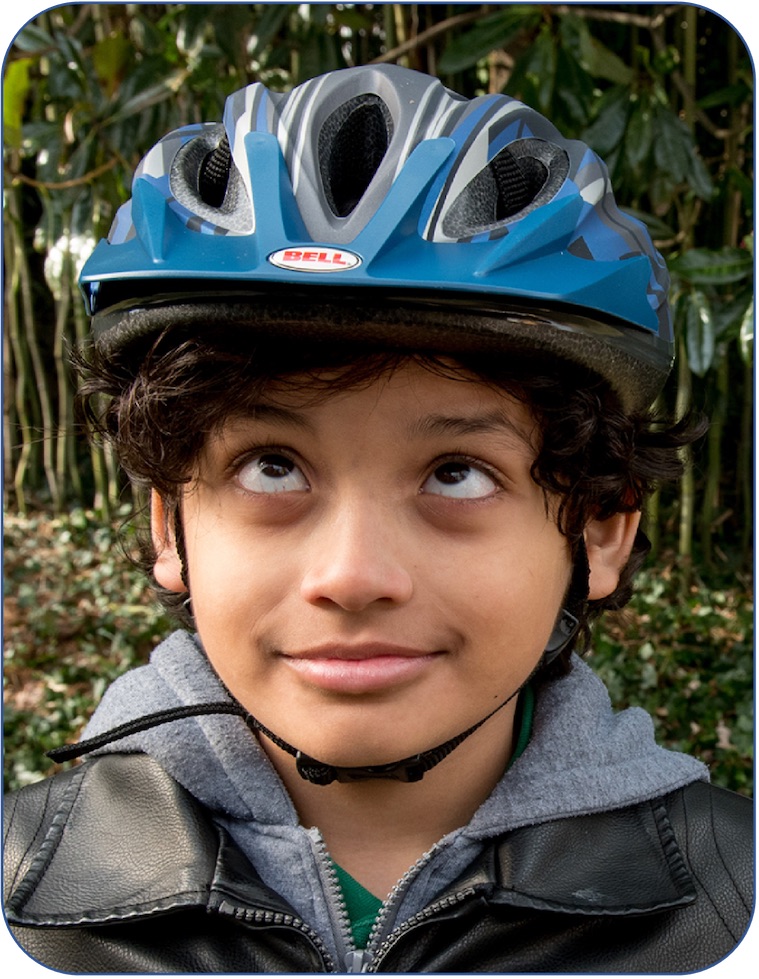
Does your helmet fit properly? Take the Helmet Fit Test
Download a poster/tip sheet below: