
 Translate
New study finds Lake Washington is getting clearer amid population growth. Here’s why.
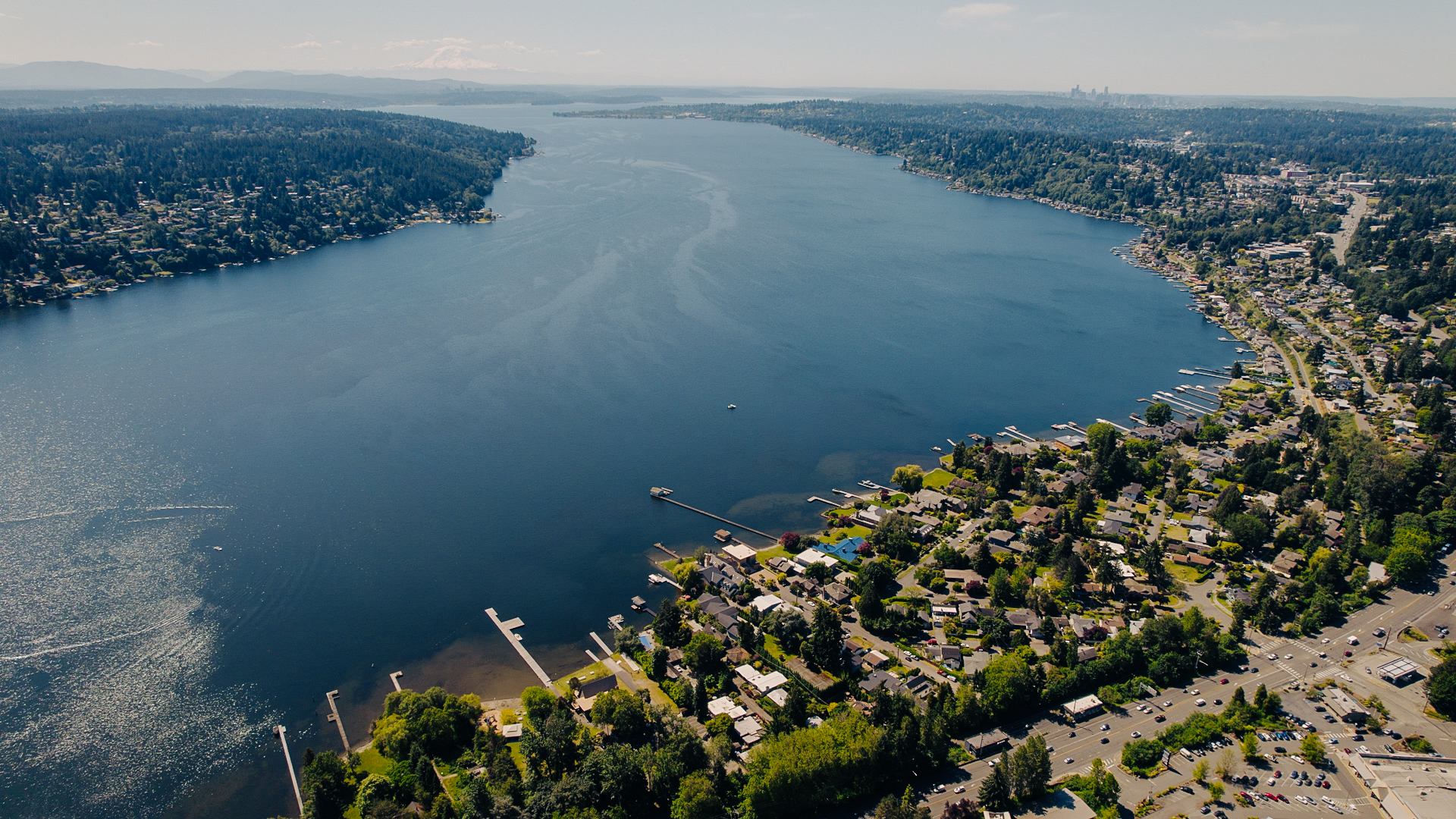
A new King County study finds Lake Washington’s water quality has improved over the past 25 years, despite new development and rapid population growth.
The study, which was recently published in a national scientific journal, examined water quality changes in the lake between 1998 and 2022. During that time, the watershed population increased by 34 percent, adding 350,000 people. Yet despite this growth, King County scientists found spring algae dropped by 50 percent and summer water visibility increased by 3 feet.
“When we analyzed changes in Lake Washington’s water quality since 1998, we expected to find subtle problems and warning signals,” said Daniel Nidzgorski, an ecologist at King County’s Water and Land Resources Division and lead author of the study. “But to our surprise, we did not find any ways that population growth and development have harmed water quality. Instead, Lake Washington has had less phosphorus, less algae, and clearer water.”
Why is Lake Washington Getting Clearer?
Researchers identified several potential reasons for these improvements:
- Better stormwater management and erosion control
- Transitioning homes from septic to regional sewer systems
- New development that favors high density, multifamily housing
They also point to voluntary, everyday actions that have likely had a positive impact on water quality in the area. These include residents’ efforts to improve their lawn care and landscaping practices and picking up pet waste.
State regulations have likely also played a role. Limits on phosphorus in lawn fertilizer, laundry products, and dishwasher detergents have resulted in less phosphorus in the lake.
Scientists note that more research is needed to pinpoint which regulatory, environmental, and individual actions are having the greatest impact. But this new data suggests that with smart policies and environmentally friendly practices, cities can grow without harming water quality.
What You Can Do to Support Cleaner Waterways
Here are a few actions you can take to help protect our lakes, streams, and the Puget Sound.
- Practice natural yard care. Finding ways to practice natural yard care—by composting & mulching, avoiding toxic pesticides and herbicides, and using organic fertilizer only when needed—helps keep waterways, wildlife, families, and pets safer. Learn more about how you can use these practices in your own lawn or garden. You can also find natural yard care events taking place throughout the year on the Haz Waste Program’s news and events page.
- Pick up pet waste. This easy task makes a big difference! In fact, it could be the single most helpful thing people can do to help keep phosphorous—and germs—out of our waterways.
- Choose safer household products. Whether you’re purchasing cleaning products, lawn and garden products, or other household items, reading labels and choosing more environmentally friendly options is an easy way to keep harmful toxins out of our waterways. You can also check out our list of DIY non-toxic household cleaning recipes.
- Store hazardous products safely. Keep hazardous products stored in sealed, undamaged, and original containers. Products should be stored high up and off the floor (especially during storm season).
- Safely get rid of your hazardous waste at one of our collection sites. Find more information on locations and hours of operation here.