
 Translate
Trichophyton mentagrophytes genotype VII (TMVII)
Short URL: kingcounty.gov/health/TMVII
What is TMVII?
TMVII (pronounced "T-M-Seven") is a fungus that can cause a skin infection called ringworm. It was first identified in heterosexuals in 2010. However, since 2021 most cases have occurred among gay/bi and other men who have sex with men (GBMSM).
The infection is called ringworm because it causes a circular, red, itchy rash. Most recent cases have presented with rashes on the genitals or buttocks. The rash can also appear on the face, trunk, arms, and legs.
How is it transmitted?
TMVII spreads through direct skin-to-rash contact with the rash, including through sexual contact. This is different from common ringworm infection which is not usually sexually transmitted. TMVII can also spread on surfaces (e.g., shared razors, sex toys, or linens).
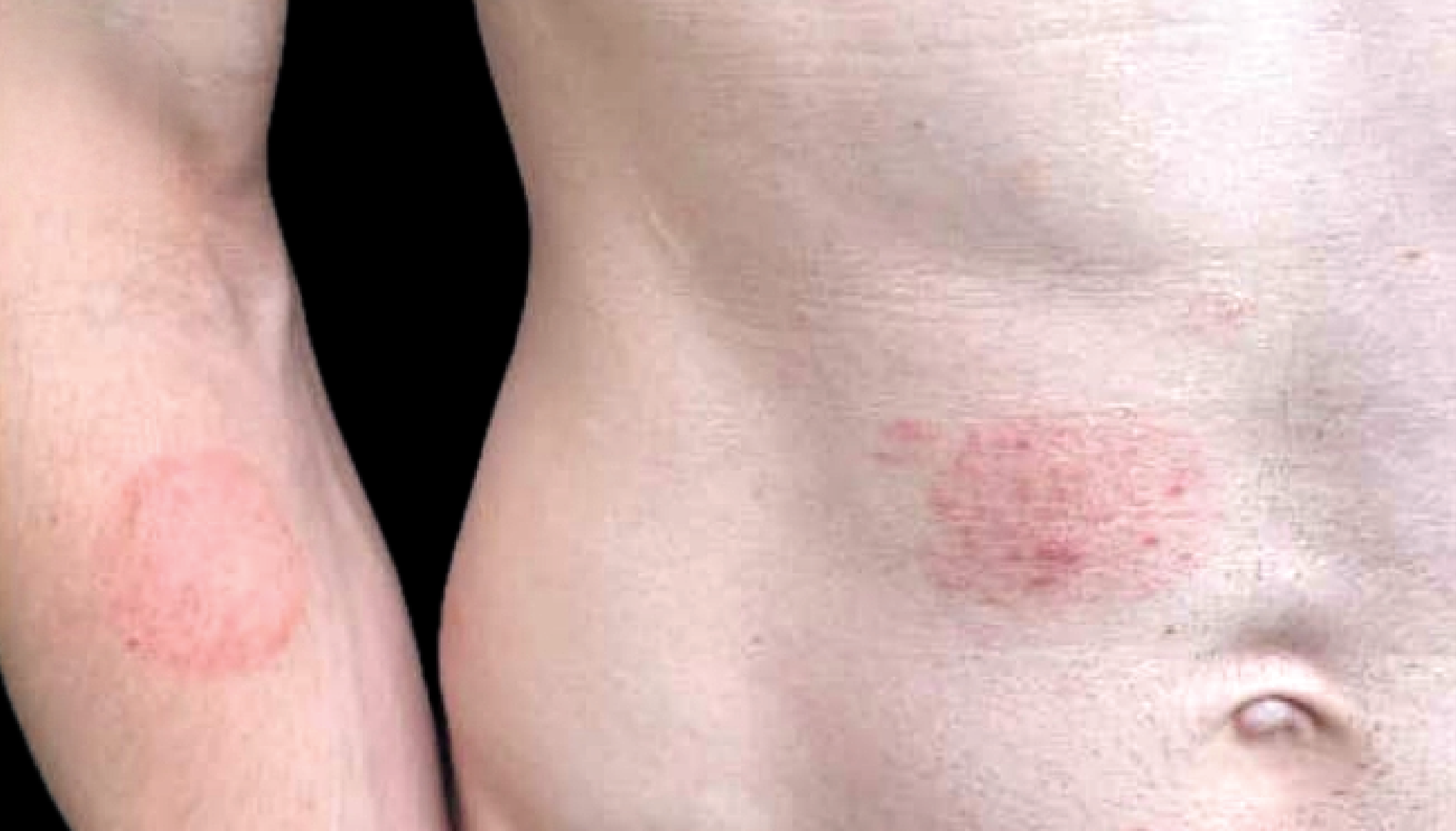
Image source: CDC
How is it treated?
TMVII is curable. It requires treatment with pills that need to be prescribed by a doctor, usually a drug called terbinafine. This is different from common ringworm infections that can be treated using over the counter creams. Avoid steroid creams as they will worsen the infection.
If you live in King County, you can get TMVII treatment at our Sexual Health Clinic.
How is it prevented?
TMVII spreads through skin-to-rash contact, including sexual contact. If you have been diagnosed with TMVII, avoid resuming sexual activity until rashes have fully healed. If continuing to have sexual activity, cover rashes with bandages or clothing. Avoid sharing personal items such as clothing, towels, bedding, razors, etc. Linens can be laundered on high heat to kill the fungus. Notify sexual partners to seek care if they develop a rash. The exact incubation period (the time from exposure to developing symptoms) for TMVII isn’t known; however, data suggest that the median time is about two to three weeks.
Where can I get tested?
Talk with a medical provider if you develop a rash you are concerned could be TMVII. People with possible TMVII can be seen and tested at the Sexual Health Clinic at Harborview Medical Center.
Resources
- King County TMVII health advisory
- Zucker J, Caplan AS, Gunaratne SH, Gallitano SM, Zampella JG, Otto C, et al. Notes from the Field: Trichophyton mentagrophytes Genotype VII - New York City, April-July 2024. MMWR Morb Mortal Wkly Rep. 2024;73(43):985-8
- Minnesota Department of Health. About TMVII 2026
- Luchsinger I, Bosshard PP, Kasper RS, Reinhardt D, Lautenschlager S. Tinea genitalis: a new entity of sexually transmitted infection? Case series and review of the literature. Sex Transm Infect. 2015;91(7):493-6
- Jabet A, Delliere S, Seang S, Chermak A, Schneider L, Chiarabini T, et al. Sexually Transmitted Trichophyton mentagrophytes Genotype VII Infection among Men Who Have Sex with Men. Emerg Infect Dis. 2023;29(7):1411-4
- NCSD. Recent dermatophyte (ringworm) cases associated with sexual contact 2026
- CDC. Clinician Brief: Emerging Ringworm 2026