
 Translate
Schedule and Community Questions
Find details about Lake Hills and NW Lake Sammamish Sewer Upgrade project schedule. You can also read common questions and answers about the project.
Project schedule
The project is in Final Design (see description below). King County started planning this project in 2015. A project this large and complex takes many years to plan and design. We plan to begin construction in 2029. Construction will last about five years. We will share updates on our progress throughout the project.
-
2014: Pre-Design (complete)
- King County brings the project team together. The team includes many subject matter experts. These experts will help the project meet its goals. They also work to reduce impacts on people and the environment.
- The team begins project planning.
- The team reviews past research of the existing pipes and project area.
-
2015: Early Design (complete)
- Field work and outreach begin. These activities help inform design.
- The team reviews and refines the options to repair, expand or add new pipes in the area.
-
(Current) 2018: Final Design
- Fieldwork and outreach continue to inform design.
- The team keeps refining the design and decides how to build the new pipes.
- The team reviews how the project could affect the environment.
- The team works with cities and local agencies to get permits.
-
2029: Construction
We plan to begin construction in 2029 and continue through 2034.
During construction:
- King County selects the construction contractor.
- The contractor builds the project.
- The Construction Management team oversees the work.
-
The Community Services team helps people near the project by:
- Telling people in advance about closures, detours, and access changes
- Sharing progress updates
After construction, the contractor repairs streets and sidewalks. They also restore planted areas.
-
2034: Operations
King County’s Operations & Maintenance team takes over to:
- Test the pipes and start using them.
- Set a regular schedule to inspect and maintain the pipes.
- Check and maintain landscaping as required by the contract.
The project schedule may change because of permit needs or delays. We will share updates on our progress throughout the project.
Community questions
- What is the Lake Hills and NW Lake Sammamish Sewer Upgrade project?
- Where is the project located?
- What is the project timeline?
- How will this project connect to the existing system?
King County will replace 4.5 miles of sewer pipes in Redmond and Bellevue. These pipes are more than 50 years old. The new pipes will support the growing communities. This upgrade will keep service safe and reliable for many years in the future.
The project area covers 4.5 miles of sewer pipes in Redmond and Bellevue. The project area is large, so we will divide work into five segments. The segment numbers do not show the order of construction.

The new sewer pipes will be in the same place or parallel to where the pipes are today. The sewer pipe upgrade starts at Northeast 85th Street near Redmond City Hall. It runs south under the Sammamish River Trail. Then it follows West Lake Sammamish Parkway between Marymoor Park and Idylwood. The project ends in Redmond’s Idylwood neighborhood.
View full-size map (opens in a new tab)
We are designing the project now. We expect construction to begin in 2029. It should take about five years. We will share updates with the community if the schedule changes. View the project schedule.
If you live or work on the northwest side of Lake Sammamish, these sewer pipes serve you every day. The dirty water you make goes into these pipes. Then it travels to Brightwater Treatment Plant near Woodinville! The treatment plant cleans the dirty water and sends it safely to Puget Sound.
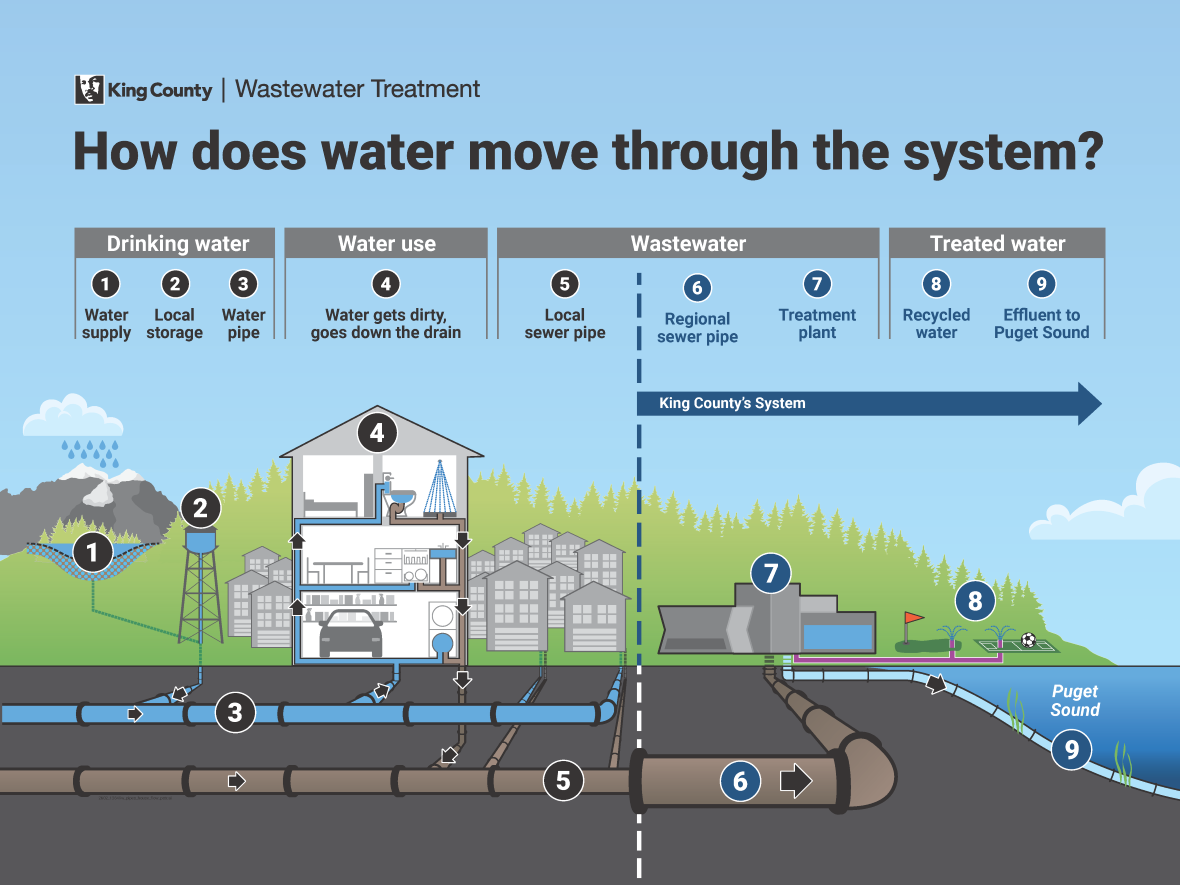
Clean water (blue pipes) comes from aquifers and goes to your home or business. You create dirty water (light brown pipes), which goes to a treatment plant for cleaning. After treatment, we can reuse the cleaned water or it can be safely discharged to Puget Sound (light blue pipes).
-
How will this project affect traffic?
- Advanced notice before construction starts on a new street
- Lane closures and detours for people walking, biking, or driving
- Temporary bus stop closures or relocations
- Local access only on some streets, when needed
-
How will this project affect the Sammamish River Trail?
-
Will I still be able to get in and out of my neighborhood?
-
Will this affect school drop-off, pick-up, and bus routes?
-
How will emergency services get through?
-
Will you ever fully close any roads?
- Identifying work hours that reduce traffic impacts
- Planning safe detour routes to keep people moving
- Make sure people can reach their homes, businesses, and services
- Tell the community in advance through our project email list and website
- Work with King County Metro to tell bus drivers and riders about changes
- Maintain access for all emergency services and deliveries
-
Can you build the pipe in small sections to reduce impacts?
We will build the new pipes under or near roads in Redmond and Bellevue. During construction, we will close travel lanes and, at times, full roads. We will follow approved traffic plans and the permitted work hours. Closures will change based on where we are working and what work we are doing.
When construction impacts traffic, you can expect:
Pipes will be installed under the Sammamish River Trail in Segments 1 through 4. When working in these areas, we will need to temporarily close the trail. We will set up alternate routes for people walking and biking when the trail is closed.
We worked with the City of Redmond, trail users, and bike groups to develop a trail closure plan. We will share more about trail closures ahead of construction.
Yes. During construction, detours or flaggers will help keep traffic moving.
The new pipes will run past John James Audubon Elementary in Redmond. We will do most of our work near the school in the summer when school is not in session.
Maintaining access for emergency services is a top priority. Fire, police, and medical teams will always have clear paths through all work areas. We will plan these paths as we design the project and get ready for construction.
Our current plans for construction include full road closures on parts of West Lake Sammamish Parkway Northeast and 180th Avenue Northeast. We are working closely with the City of Redmond to plan these closures. This includes:
If we fully close a road, we will:
Once we hire a construction contractor, they will make the final decisions about the schedule and how to do the work. The contractor may suggest other options that reduce or avoid road closures.
We will build the sewer upgrade in 5 segments. Each segment has different soil, groundwater levels, and environmental conditions. This means that the way we build the pipes and how long it takes may change segment by segment.
- Where will construction start? What is the order of the work?
- How long will streets be dug up?
We will know the order of the work once we hire a construction contractor. They will help us plan where to start and how to move through the project area.
This depends on the construction method and the underground condition in each project segment. We will share about construction methods and timelines for each neighborhood as we get closer to construction.
-
Will the project impact or remove trees?
We will remove trees, as needed, for crews to work safely. We will also remove trees that would not survive construction activity near their roots.
For every tree we remove, we will plant at least one new tree. If the tree is more than 30 inches wide, we will plant three new trees to replace it.
-
How will natural areas be restored after construction?
After we finish building the new pipe, we will restore all areas affected by our work.
We will also make improvements for people, plants, and animals in certain locations. These improvements will:
- Replace a pipe to improve fish passage between Country Creek and the Sammamish River
- Improve habitat on the bank of the Sammamish River near Leary Way
- Widen the Sammamish River Trail between Northeast 85th Street and Leary Way
- Move maintenance holes off the Sammamish River Trail so we can maintain the new pipe without disrupting trail use
Learn more about how King County restores natural areas after construction.
-
How will King County protect fish and wildlife during construction?
We will work with the construction contractor to protect fish and wildlife during construction.
We will plan our work to avoid important natural areas as much as possible.
In Segment 2, we need to build new pipes under the Sammamish River. We will install the new pipes using a special machine to dig a tunnel below the river. This protects fish, wildlife, and plants!
After we install the new pipes, we will restore areas where we worked. We will also keep watch on important nature areas near the new pipes to make sure they stay healthy.
To learn more about how King County protects fish and wildlife, visit our Clean Water Healthy Habitat webpage.
- Who is paying for this project?
People who pay a monthly sewer bill to their local utility cover most of the cost for King County’s wastewater utility. This fee helps run our services and pay for projects and programs. People who use septic systems do not pay this monthly sewer fee. We also use grants, loans, and operating funds to pay for projects. We work hard to balance these funding sources.
We plan for years before starting a project. This helps us manage costs for our sewer customers.
To learn more, visit our Investing in Clean Water webpage .
-
Will you shut off sewer service?
We do not expect to shut off sewer service during this project. If that changes, we will let you know ahead of time.
-
Will there be construction on private property?
Yes. Work will happen on private property. If we need to work on your property, someone from King County’s property team will talk with you.
-
Will there be impacts to my landscaping?
We may need to move plants or soil if we work on or near private property. If we need to work on your property, someone from King County’s property team will talk with you.